
Aromaterapia e ansia, le essenze come benessere tangibile

L’ansia parla la lingua dei pensieri che girano su se stessi – scenari che si moltiplicano nella mente, mentre il corpo resta lì, in attesa di qualcosa a cui aggrapparsi davvero.

È qui che entra in scena la materia. Una goccia di lavanda, di petit grain, di bergamotto hanno un peso, una temperatura, un profumo che si dispiega nel tempo; è qualcosa he si respira, presente qui e ora, mentre il pensiero continua a rimuginare altrove. La camomilla, l’arancio dolce, la maggiorana parlano direttamente al corpo, arrivano prima che la mente abbia il tempo di raccontarsi qualcosa sopra.

Accendere il diffusore con un’essenza che risuona con noi, respirarla ogni volta che serve: un punto fermo semplice, quasi silenzioso, in mezzo al rumore dei pensieri. Sono gesti che hanno trovato posto anche in ambito hospice, dove l’olfatto è un modo di prendersi cura dell’ambiente e di chi ci lavora.

Praticare l’aromaterapia emozionale significa offrire a noi stessi proprio questo: una materia precisa, reale, a cui affidarsi mentre il corpo -e l’anima- si distendono.

L’aromaterapia emozionale accompagna il benessere e la consapevolezza sensoriale; per un disagio ansioso significativo, il riferimento resta il professionista sanitario o lo specialista di salute mentale.
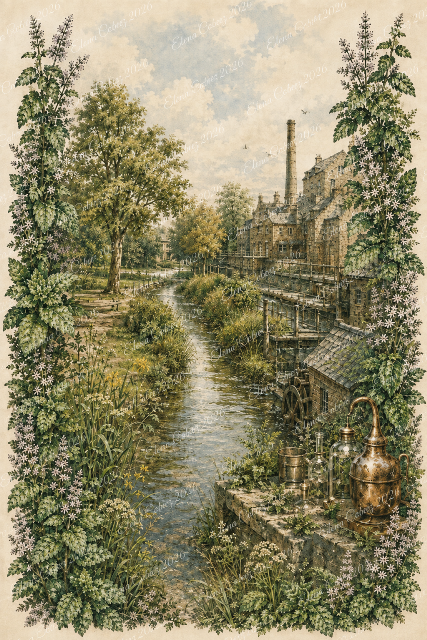
The Wandle river – Materia Viva n.9

Each issue of Materia Viva begins with an aromatic material and follows it as one might follow a trail: not only its scent, but the landscape, history, gestures, images and words that the material carries with it.

river wandle mitcham UK

This time, the thread leads to a river: the Wandle, nine miles of water flowing from the hills south of London to the Thames. It rises from chalk, and that explains much of what follows: rain filters for months through the porous rock before re-emerging as spring water, cold and clear in every season.

An entire district of trades grew up around that water. The damp meadows along the river supported mint and chamomile, while lavender grew further away where the soil became more gravelly, and the same stills were used to distil them. Further downstream, mills ground tobacco for snuff. At Merton Abbey, William Morris moved his entire production in 1881, after having the river water analysed to make sure it was suitable for printing with vegetable dyes.

It is a story of water and hands. Of a single current that, over nine miles, allowed very different trades to exist — growers, distillers, dyers — all sustained by the same natural resource: crystal-clear water.

A recent special edition of the e-zine was also devoted to Mitcham peppermint, tracing the history of this aromatic plant through the landscape, people and industrial heritage of south London.

You can receive a free PDF copy, and for further details about the project and how to support it, contact us via the WhatsApp button on the website or by email at professionefelice@gmail.com. You may also discover the next issue of the ezine, about the Ramy, a resin from Madagascar.

Esperienze olfattive, scrittura e immagini d'autore

×