
The Rivers He Dressed in Cloth

William Morris named his fabrics after rivers. Wandle, Cray, Evenlode, Medway, Kennet, Windrush — tributaries of the Thames, given to printed cloth.

The Wandle was the most ambitious design he ever drew, and the way he spoke of it is worth pausing on. He would give the river its name only if the work turned out well enough to deserve it. The honour was not his to grant. It had to be earned by the thing he made.

And the river is small. He knew it. It is precisely because the Wandle is a modest stream, not a great one, that the design had to be elaborate and splendid. Worth is not measured against scale.

The reason the Wandle mattered to him is plain enough: its water was what made the dyeing possible. The colour came out of that stream. So the naming is not decoration, it is an act of grateful naming.

The work carrying the name of the condition that allowed it to exist. Which is a rarer gesture than it sounds. In the same century, the same river was being consumed by industries that used it without ever naming it.

We followed the Wandle ourselves, for a different material and a different reason, in issue 9 of Materia Viva, the independent ezine about aromatic materials and their environments.
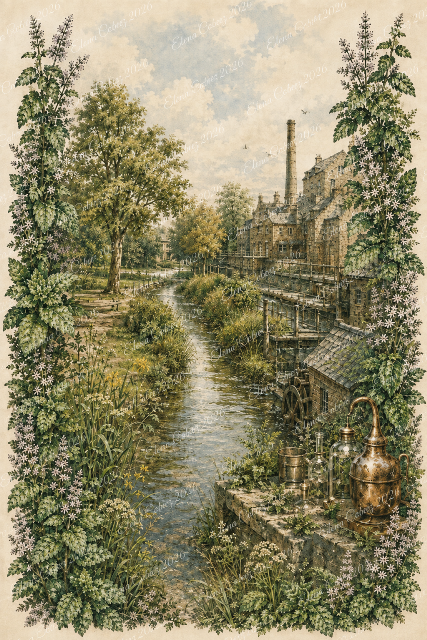
Materia Viva n.9 — Il fiume Wandle

Ogni numero di Materia Viva nasce da una materia aromatica e la segue come si seguirebbe una traccia: non solo il profumo, ma il paesaggio, la storia, i gesti, le immagini e le parole che quella materia porta con sé.

river wandle mitcham UK

Questa volta il filo conduce a un fiume: il Wandle, nove miglia d’acqua che scendono dalle colline a sud di Londra fino al Tamigi. Nasce dal gesso, e questo spiega tutto il resto — la pioggia filtra per mesi dentro la roccia porosa e riemerge come sorgente, fredda e limpida in ogni stagione.

Su quell’acqua si è costruito un intero distretto di mestieri. I prati umidi lungo il fiume ospitavano la menta e la camomilla, la lavanda cresceva più in là dove il terreno si fa ghiaioso, e gli stessi alambicchi distillavano l’una e l’altra. Più a valle i mulini macinavano tabacco per il tabacco da fiuto. E a Merton Abbey William Morris trasferì tutta la sua produzione nel 1881, dopo aver fatto analizzare l’acqua del fiume per accertarsi che fosse adatta alla stampa con i colori vegetali.

È una storia di acqua e di mani. Di una sola corrente che, lungo nove miglia, ha permesso a mestieri diversi di esistere — agricoltori, distillatori, tintori — con una risorsa naturale dall’acqua cristallina.

Puoi riceverne una copia gratuita in PDF e, per ogni dettaglio sul progetto e su come sostenerlo, scrivici tramite il tasto WhatsApp del sito o via mail: professionefelice@gmail.com

[You can find the Engiish version of this article here]

Esperienze olfattive, scrittura e immagini d'autore

×